

All dates and times in this forecast are in Eastern Standard Time (EST / UTC-5).
December: the slow planets change direction. Saturn and Neptune wake up, Jupiter turns back, and the closest full moon of the year rises two nights after the solstice.
November restarted the engine. December decides where it is going. The month opens with a jolt, as Venus returns to Scorpio and Mars squares Uranus on December 4, then the Sagittarius New Moon on December 8 sets the aim for the season. The middle of the month belongs to the slow planets: Saturn stations direct on December 10, and on Saturday, December 12, Neptune stations direct and Jupiter stations retrograde within three hours of each other. Three stations in three days change the pace of everything that follows. The winter solstice on December 21 opens Capricorn season, and the Cold Supermoon in Cancer on December 23 arrives as the closest full moon of 2026. The year ends with two Saturn squares and a steadying trine to Mars: a sober, useful finish.
Use Planetaro to track planetary hours and time the month with intention. And first, some news of our own.
News on Planetaro
Meet the Planetaro Almanac 2027: planetary hours on paper. For the first time, Planetaro leaves the screen. The Almanac is a printed desk calendar with every planetary hour of 2027, calculated for one city and checked to the minute. The front of each month shows the planet of each day, sunrise and sunset, the Moon phases, eclipses, meteor showers, and the days a planet turns retrograde or direct. Turn the page over for the table: the start of every planetary hour of every day.
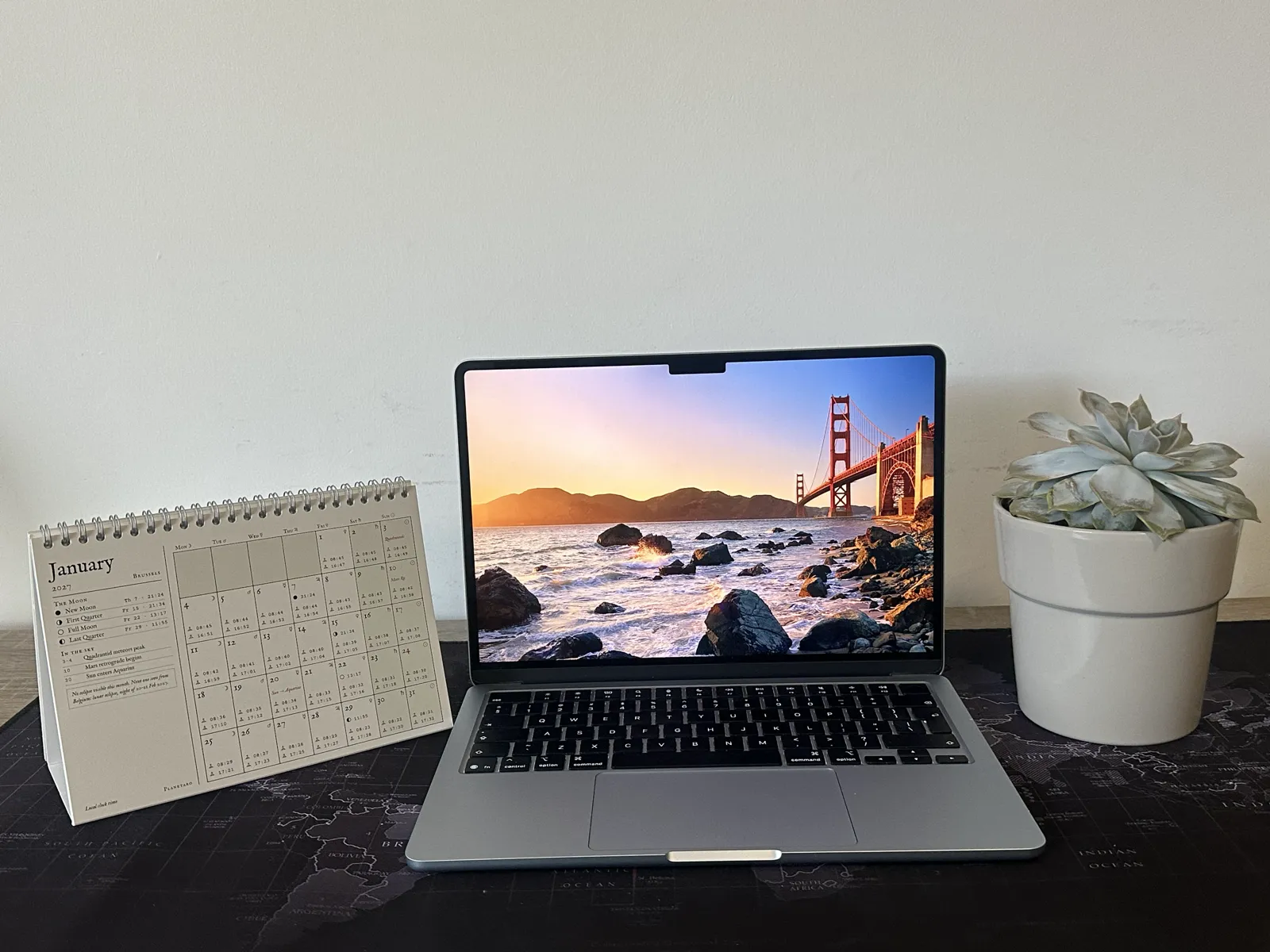
Planetary hours change with the place, so each edition is made for one city: Amsterdam, Berlin, Brussels, London, Madrid, Paris, New York, Los Angeles, Chicago, Houston, Atlanta, and Washington. If your city is not on the list, tell us, and we will make the editions that are asked for most.
See the editions of the Almanac →
Looking for a gift? Born in the Hour turns the planetary hour of someone's birth into a personalised poster you can print at home.
Watch: December in Eleven Minutes
Prefer to watch? Astrologer AstroRosalie walks through the month's transits, from the Sagittarius New Moon and the three stations of December 10 to 12 to the Cold Moon in Cancer, with exact degrees, decans, and the planetary days and hours that fit each one.
Astrological Spotlight: December 2026
December 4: Venus Returns to Scorpio, Mars Squares Uranus
A Friday, Venus's own day, and a loud one. At 3:13 AM EST Venus re-enters Scorpio, the sign she left on October 25 during her retrograde. Whatever went unfinished in October, in love, values, or trust, comes back into view, and this time Venus is moving forward. She clears her retrograde shadow on December 15, when she passes the degree where she first turned back (8°29' Scorpio).
The same day carries two hard aspects. Mercury squares Jupiter at 2:03 AM EST: big talk, loose promises. Then Mars squares Uranus at 2:28 PM EST (3°18' Virgo and Gemini): sudden moves, short tempers, and plans that change without warning. Mars is also slowing down ahead of his retrograde on January 10.
Planetaro tip: Friday is Venus's day. Venus hours are traditionally associated with relationships and reconciliation, a fitting moment to reflect on what October left open.
December 6 to 9: Mercury in Sagittarius and the New Moon
Mercury enters Sagittarius on December 6 at 3:33 AM EST and immediately goes to work: a trine to Neptune on December 7 (5:15 AM EST), then an opposition to Uranus (5:29 AM EST) and a sextile to Pluto (2:32 PM EST) on December 8. In two days Mercury touches all three outer planets, and the conversation jumps from dreamy to shocking to deep.
That is the backdrop for the New Moon at 16°57' Sagittarius on Tuesday, December 8, at 7:52 PM EST. Sagittarius New Moons are for aim: a belief to test, a trip to plan, a subject to study, a bigger map. Its ruler, Jupiter, is four days from turning retrograde, so this cycle opens on a theme of aiming first and refining later.
December 9 brings the friction. Mercury squares Mars at 8:41 AM EST (sharp words, rushed messages) and Venus squares Pluto at 1:38 PM EST (jealousy, control, and the urge to test someone): a day traditionally read as tense for conversations and close relationships.
Planetaro tip: Jupiter rules Sagittarius, and a Jupiter hour on the evening of December 8 is a traditional moment for setting intentions under this New Moon. December 9 is a Wednesday, Mercury's day: a day to reflect on how you say things.
December 10 to 12: Three Stations in Three Days
This is the center of the month.
Saturn stations direct at 7°56' Aries on Thursday, December 10, at 6:31 PM EST, ending a retrograde that began on July 26. In astrology this is the point where responsibilities that felt stalled since summer are said to move again. Mercury trines Saturn the next morning (December 11, 8:25 AM EST), an aspect traditionally linked with focus, planning, and serious conversations.
On Saturday, December 12, Venus sextiles Mars at 4:15 AM EST, a brief agreement between what you want and what you do. Then the sky turns twice in one evening. Neptune stations direct at 1°37' Aries at 5:17 PM EST, retrograde since July 7. Jupiter stations retrograde at 27°01' Leo at 7:57 PM EST and stays retrograde until April 12, 2027.
Saturn and Neptune met at 0°45' Aries on February 20, and they are still only about 6° apart. With both moving forward again, the question they asked in February (what are you actually willing to build your faith on?) returns as a practical task. Jupiter turning back in Leo does the opposite: four months associated with reviewing what began under November's Mars and Jupiter conjunction.
Stations are concentrated moments. Astrologers describe the days around them as heavy or oddly still, and the following week as the time the new direction shows.
Planetaro tip: December 12 is a Saturday, Saturn's day, two days after Saturn turned direct. Saturn hours are traditionally associated with structure and long-term commitments, a natural moment to reflect on your plans for 2027.
December 15 to 18: Venus Clears Her Shadow, the Sun Trines Jupiter
On December 15 Venus passes 8°29' Scorpio and leaves the retrograde story behind for good: new ground for relationships and for what you value. The First Quarter Moon at 25°17' Pisces (December 17, 12:43 AM EST) is a point of action in the lunar cycle, with the Moon meeting Neptune at midday and Saturn just after midnight.
Then the easiest aspect of the month: the Sun trines Jupiter on Friday, December 18, at 4:21 PM EST (26°58' Sagittarius and Leo). It is an aspect associated with confidence and generosity, right before the holidays.
Planetaro tip: Friday, December 18, is Venus's day, with the Sun and Jupiter in harmony. Sun and Jupiter hours are traditionally associated with generosity, celebration, and gatherings.
December 21: Winter Solstice, the Sun Enters Capricorn
At 3:50 PM EST on Monday, December 21, the Sun enters Capricorn: the winter solstice, the shortest day and longest night in the Northern Hemisphere. Capricorn season is ruled by Saturn, now direct, so this year the season starts with traction. The Moon meets Uranus in Gemini that night (9:41 PM EST), a restless, bright-minded start to the week.
Planetaro tip: Planetary hours follow sunrise and sunset, so on the solstice, in the Northern Hemisphere, the day hours are the shortest of the year and the night hours the longest. A long Saturn hour that night is a traditional moment to reflect on your goals for the season.
December 23: The Cold Supermoon in Cancer
At 8:28 PM EST on Wednesday, December 23, the Full Moon peaks at 2°14' Cancer. It is the Cold Moon, the third and last supermoon of the year, and the closest full moon of 2026: about 356,740 km away, with perigee only about seven hours later, in the early hours of December 24.
The Moon is at home in Cancer, and this one lands right on the holidays: family, memory, food, and who feels like home. The Sun squares Neptune that morning (6:37 AM EST), so the Full Moon forms a tight T-square with Neptune in Aries. Feelings run high and facts run soft; nostalgia is strong, and so is the temptation to see what you wish were true. Mercury trine Jupiter the same day (1:03 PM EST) keeps the words warm and generous.
Mercury enters Capricorn on December 25 at 1:22 PM EST and squares Neptune on December 26 (2:47 PM EST), an aspect associated with blurred details and assumptions.
Planetaro tip: The Moon rules Cancer, and Moon hours are traditionally associated with home, family, and care. On the night of this Full Moon they are a fitting time to be with the people who feel like home.
December 29 to 31: Saturn Checks the Year
The last days are a review with a firm editor. The Sun squares Saturn on December 29 (6:28 PM EST), the Last Quarter Moon falls at 9°05' Libra on December 30 (1:59 PM EST), and Mercury squares Saturn that evening (6:55 PM EST). Limits, deadlines, and plain facts. It is not festive, but it is a traditional time for taking stock of the year and deciding what does not come with you.
New Year's Eve lightens the load. The Sun trines Mars at 7:03 AM EST and Mercury trines Mars at 6:30 PM EST on December 31, both from Capricorn to Virgo, aspects associated with practical energy and steady work. Mars is almost motionless by now, ten days before his retrograde.
Two things to carry into January: the Sun and Mercury meet in Capricorn on January 1 (12:08 PM EST), a clear-headed first day of the year, and Mars stations retrograde in Virgo on January 10.
Planetaro tip: December 31 is a Thursday, Jupiter's day. Saturn hours are traditionally associated with review and closure, Jupiter hours with hope and growth: one to look back on the year, one to look ahead to 2027.
Night Sky Highlights
- Venus, the Morning Star (all month): Venus blazes in the south-east before sunrise at magnitude -4.4, more than 40° from the Sun. On the morning of December 5 a thin crescent Moon stands close beside it.
- Geminid Meteor Shower (peak night of December 13 to 14): The best shower of the year, and this time the Moon cooperates: a 22 percent crescent that sets by mid-evening. Under a dark sky expect 60 to 100 meteors per hour, from mid-evening until dawn, with the radiant highest around 2 AM.
- Cold Supermoon (December 23): The closest full moon of 2026, about 4,000 km nearer than November's Beaver Moon. It rises around sunset among the stars of Gemini and rides high all night, as winter full moons do.
- Jupiter and Mars (late evening to dawn): Jupiter rises around 10 PM at the start of the month and around 8 PM by New Year's Eve, with Mars following and brightening every week. The Moon passes Jupiter on the morning of December 27 and Mars on December 28.
- Saturn (evening): Saturn is the evening planet, high in the south at nightfall. The Moon sits beside it on the evening of December 17.
Featured Articles
- December 2026 Astrology Calendar, Astrolis
- We're Getting a Christmas Eve Supermoon This Year, BBC Sky at Night
Full Calendar: December 2026
- December 1: Last Quarter Moon (9°03' Virgo, 1:09 AM EST). A point of release and sorting.
- December 4: Mercury square Jupiter (2:03 AM EST). Big talk, loose promises.
- December 4: Venus enters Scorpio (3:13 AM EST). October's unfinished business returns, now moving forward.
- December 4: Mars square Uranus (3°18' Virgo and Gemini, 2:28 PM EST). Sudden moves and short tempers.
- December 6: Mercury enters Sagittarius (3:33 AM EST). Bigger questions, blunter answers.
- December 7: Mercury trine Neptune (5:15 AM EST). Imagination and intuition speak clearly.
- December 8: Mercury opposite Uranus (5:29 AM EST) and sextile Pluto (2:32 PM EST). Surprising news with depth behind it.
- December 8: New Moon in Sagittarius (16°57', 7:52 PM EST). A new cycle about aim and belief.
- December 9: Mercury square Mars (8:41 AM EST). Sharp words, rushed messages.
- December 9: Venus square Pluto (1:38 PM EST). Intensity and control in relationships.
- December 10: Saturn stations direct (7°56' Aries, 6:31 PM EST). Saturn's review ends.
- December 11: Mercury trine Saturn (8:25 AM EST). Focus and serious conversations.
- December 12: Venus sextile Mars (4:15 AM EST). Desire and action agree.
- December 12: Neptune stations direct (1°37' Aries, 5:17 PM EST). The fog begins to lift.
- December 12: Jupiter stations retrograde (27°01' Leo, 7:57 PM EST). Four months of review, until April 12, 2027.
- December 13 to 14: Geminid meteor shower peaks overnight.
- December 15: Venus clears her retrograde shadow (8°29' Scorpio). New ground for relationships and values.
- December 17: First Quarter Moon (25°17' Pisces, 12:43 AM EST). A point of action in the lunar cycle.
- December 18: Sun trine Jupiter (4:21 PM EST). Confidence and generosity.
- December 21: Winter solstice, Sun enters Capricorn (3:50 PM EST). Capricorn season begins.
- December 23: Sun square Neptune (6:37 AM EST). Soft facts, strong wishes.
- December 23: Mercury trine Jupiter (1:03 PM EST). Warm, generous words.
- December 23: Full Moon in Cancer, the Cold Supermoon (2°14', 8:28 PM EST). The closest full moon of 2026.
- December 25: Mercury enters Capricorn (1:22 PM EST). Thinking turns practical.
- December 26: Mercury square Neptune (2:47 PM EST). Details and assumptions blur.
- December 29: Sun square Saturn (6:28 PM EST). Limits and deadlines.
- December 30: Last Quarter Moon (9°05' Libra, 1:59 PM EST). A point of release before the new year.
- December 30: Mercury square Saturn (6:55 PM EST). Serious talk, plain facts.
- December 31: Sun trine Mars (7:03 AM EST) and Mercury trine Mars (6:30 PM EST). Practical energy at the end of the year.